Toboggan du Carbet

The Carbet Waterfall is a little hidden gem in the heart of the lush forest in the town of Carbet. It's not directly accessible by road, so you'll need to walk for 45 minutes to get there. But the hike is definitely worth it.

It gets its name from the fact that visitors can slide down its bed until they reach the pool.

To get there, head towards the former Aqualand water park. There is a small parking lot nearby where you can park your car before continuing on foot. Once you have crossed the small bridge, turn right and follow the river to reach the Toboggan. Arrows on the rocks will show you the way so you don't get lost.

Be sure to wear good athletic shoes that will allow you to walk on wet, soggy, and even slippery rocks.

Hardy distillery

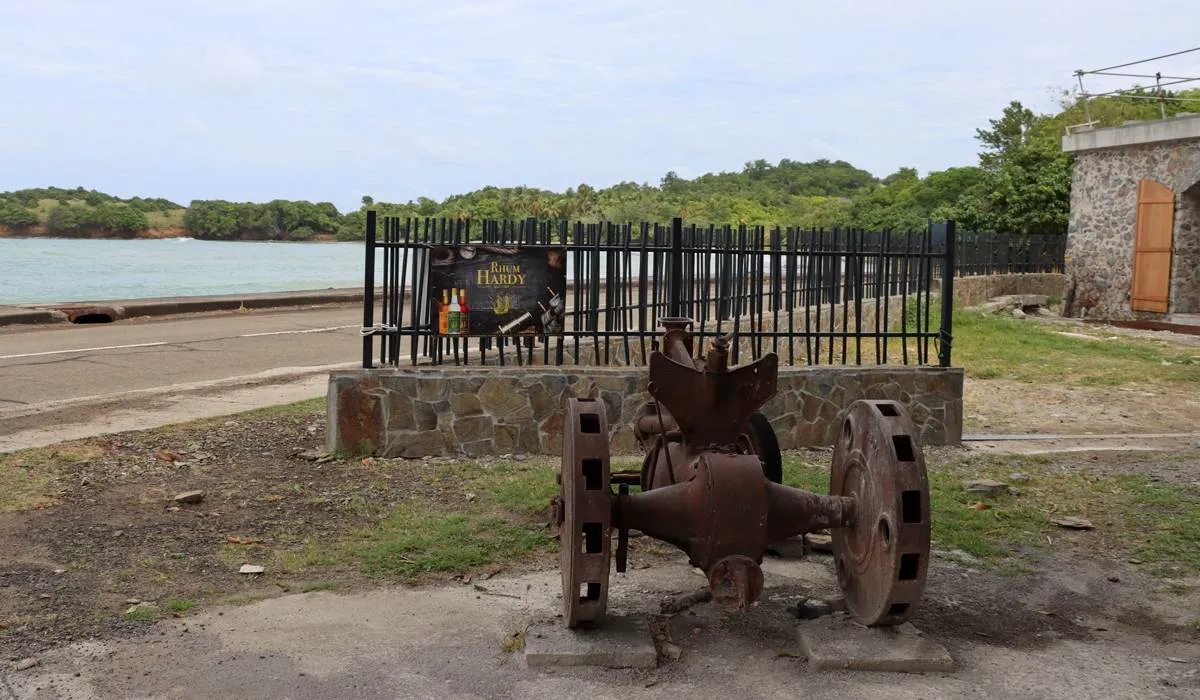
The Hardy distillery is located in Tartane, facing Anse de la Brêche and near the Caravelle Peninsula. It is undoubtedly one of the lesser-known distilleries in Martinique. Yet it produces a historic rum of the island, born in 1830 when the estate—then called “La Grâce”—was renamed “Habitation Sucrerie Tartane.” At the time, it included a residence, industrial buildings, sugarcane plantations, and a windmill, which can still be admired from the roadside.

A few years later, Émilien Bonneville, a wealthy landowner from the Tartane region, decided to purchase the estate.

In 1880, in a habitation that had previously produced only sugar, Bonneville installed a steam engine to begin distilling rum. Martinique was then in the midst of a sugar crisis, and many distilleries had turned to rum production.

He later passed the estate on to his daughter Clémence, who was married to Gaston Hardy des Sources.

In 1905, the estate was officially transferred to Gaston Hardy, who gave it its name: “Rhum G Hardy Tartane.” His rum was distinguished and won several medals in mainland France. Although the distillery was devastated by two fires, it was fully restored by his son—also named Gaston—who was an engineer.

In 1955, Gaston Hardy Jr. became the owner. To boost the brand’s reputation, he created the famous Rhum Paille, aged for 12 to 18 months in oak barrels. This helped solidify Hardy’s renown.

In the 1970s, he personally oversaw the renovation and modernization of the production facilities, including the windmill mechanism, a concrete chimney, a distillation column, and an automatic feed belt that he built himself.

He passed away in 1990, and the distillery continued operating until 1994.

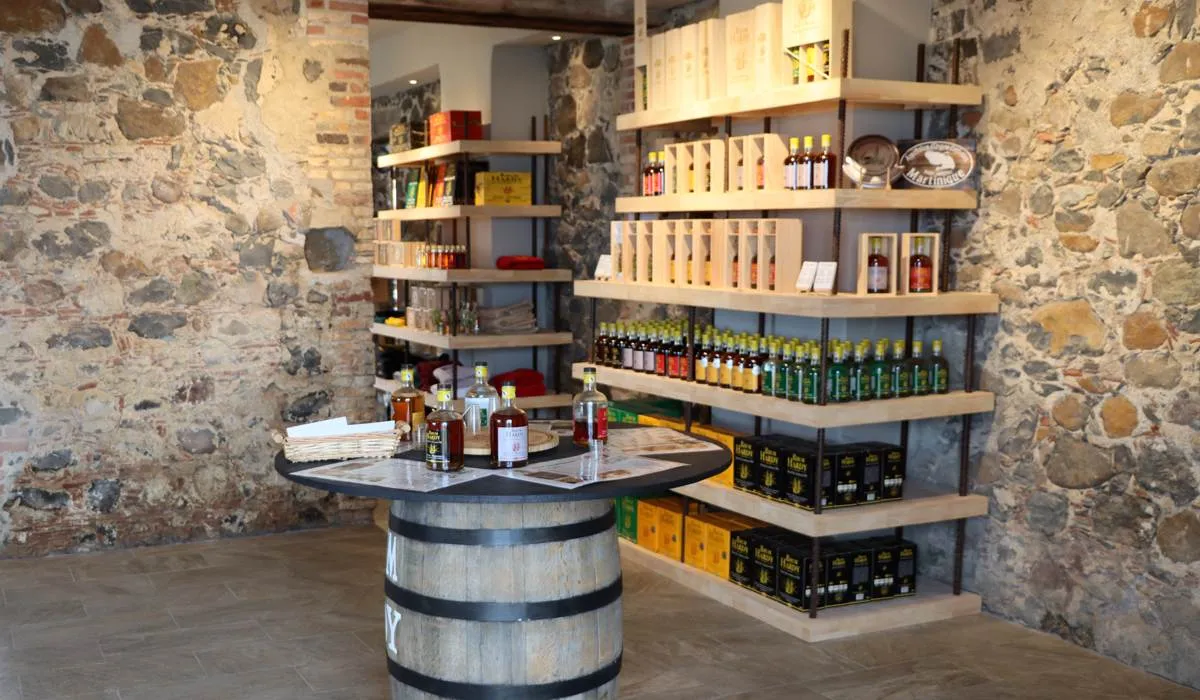
His heirs took over and transferred production to the Saint-James distillery in Sainte-Marie. Hardy rum is now produced according to the strict standards of the Appellation d’Origine Contrôlée (A.O.C.). A boutique at the entrance of the original site offers tastings and sells the full range of Hardy rums. Production remains limited (120,000 bottles), and distribution is local only.

Over time, the buildings suffered damage from humidity, but public authorities launched a fundraising campaign to restore the site. Some buildings are currently undergoing renovation, but this historic location remains open to visitors.

Photo gallery
Hardy Distillery Shop
Hardy distillery rum
Entrance sign to the Hardy distillery
Old production machine from the Hardy distillery
Hardy Distillery Shop
Rums for sale at the Hardy distillery

Savane des Pétrifications

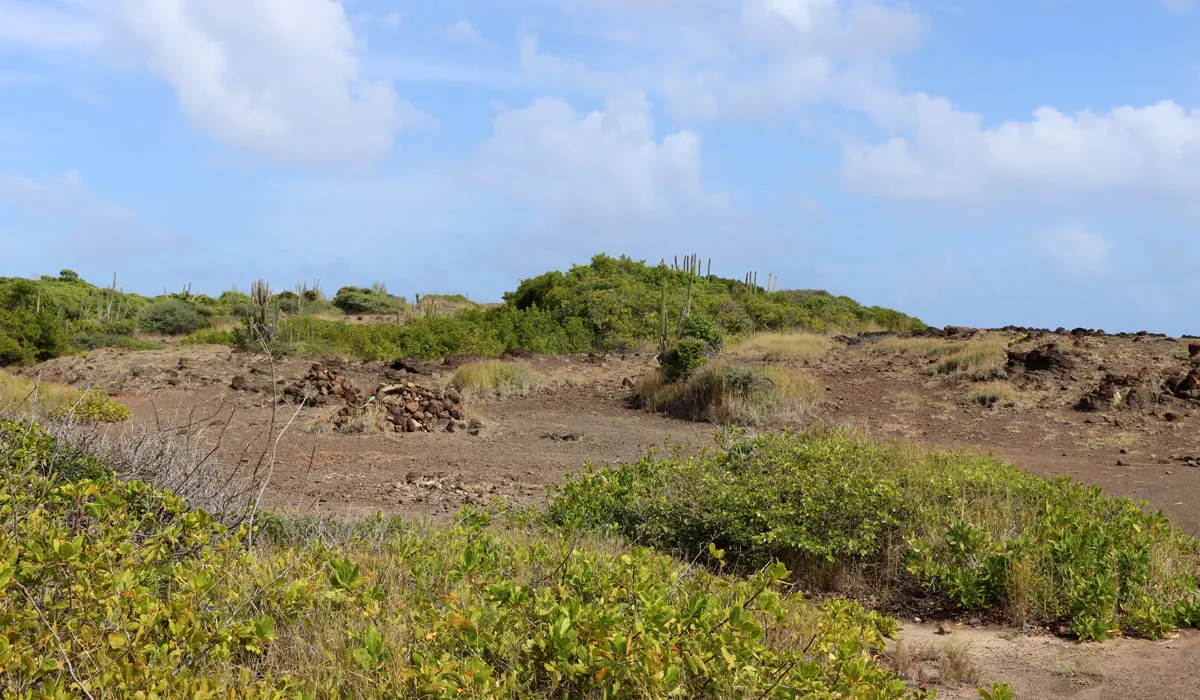
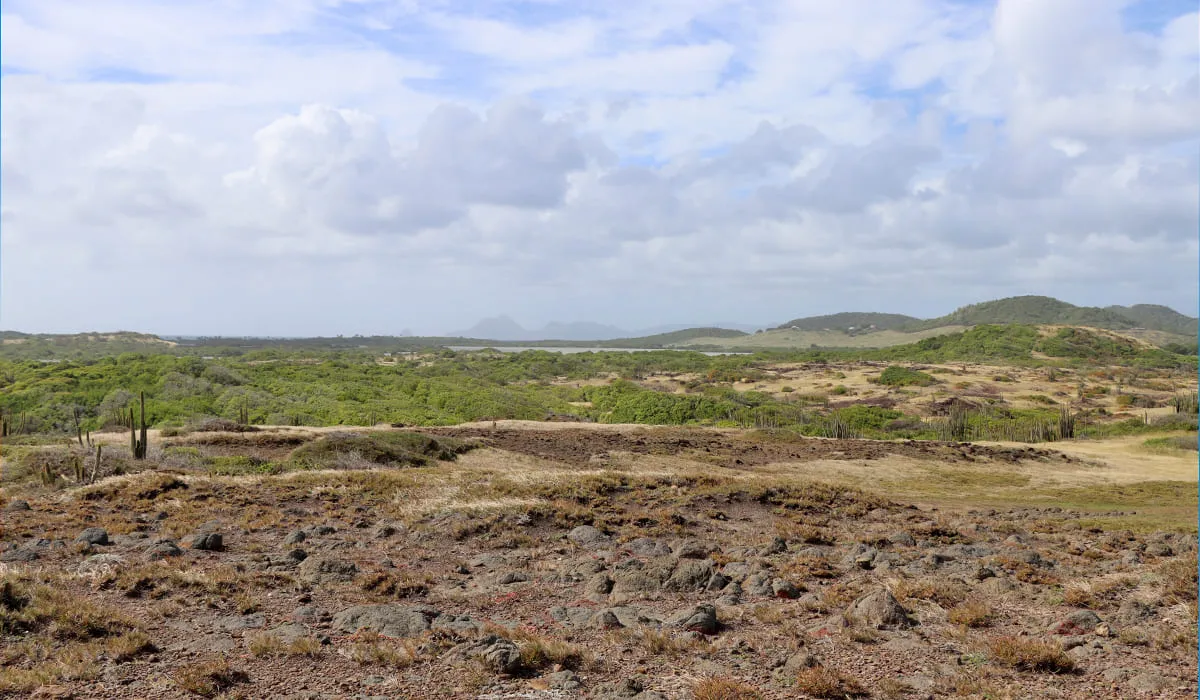
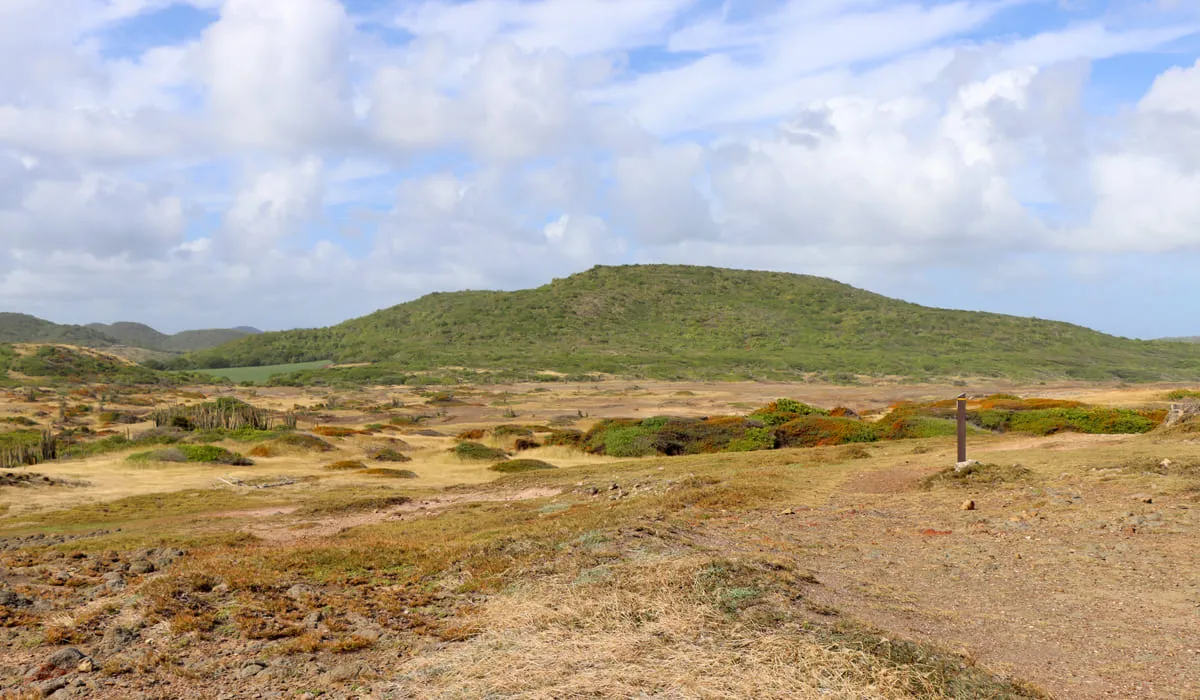
Near the very famous Salines beach in the town of Sainte Anne, is the Savane des Pétrifications at the southern tip of Martinique. It is an old dry marsh where there were once many pieces of wood, sometimes fossilized trees.

However, looting has removed these geological remains and the place has become a land of hiking visitors coming to admire the surprising landscape.

The area is almost desert and contrasts with the rest of the landscape of the islet. The Savane des Pétrifications is located on the site of a very old volcano of which the Morne des Pétrifications which rises to 119 meters is one of the remains.

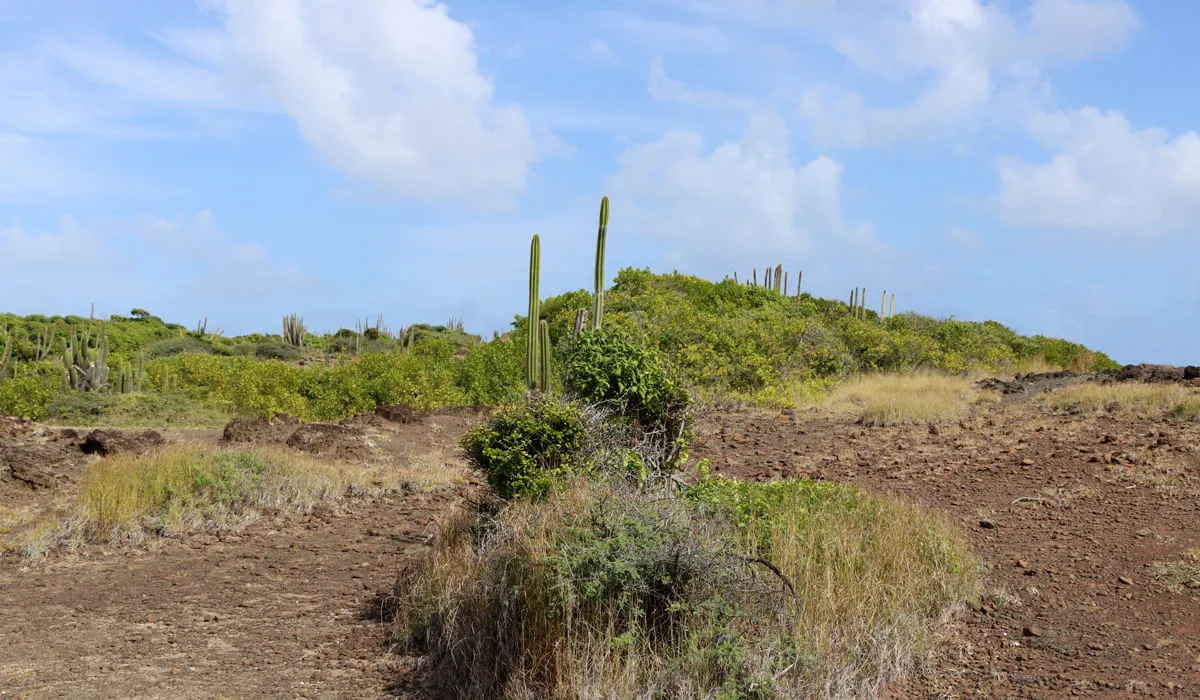
The bare land of this desert is strewn with blocks of yellow, red or black polychrome jasper, giving the landscape an astonishing lunar aspect.

It is located in front of the Table du Diable, a huge rock that has risen from the waves a few cables offshore and the subject of many legends.

Note that the Savane des Pétrifications is with the Presqu'île de la  Caravelle (Caravelle Peninsula) one of the oldest parts of Martinique and that these two original parts were linked gradually by successive volcanic eruptions to form the current Martinique .

The Savane des Pétrifications is one of the stages of the "Trace des Caps" hike, a path that runs along the southern coast of Martinique and is a site classified by the Parc Naturel régional of the island.

Photo gallery
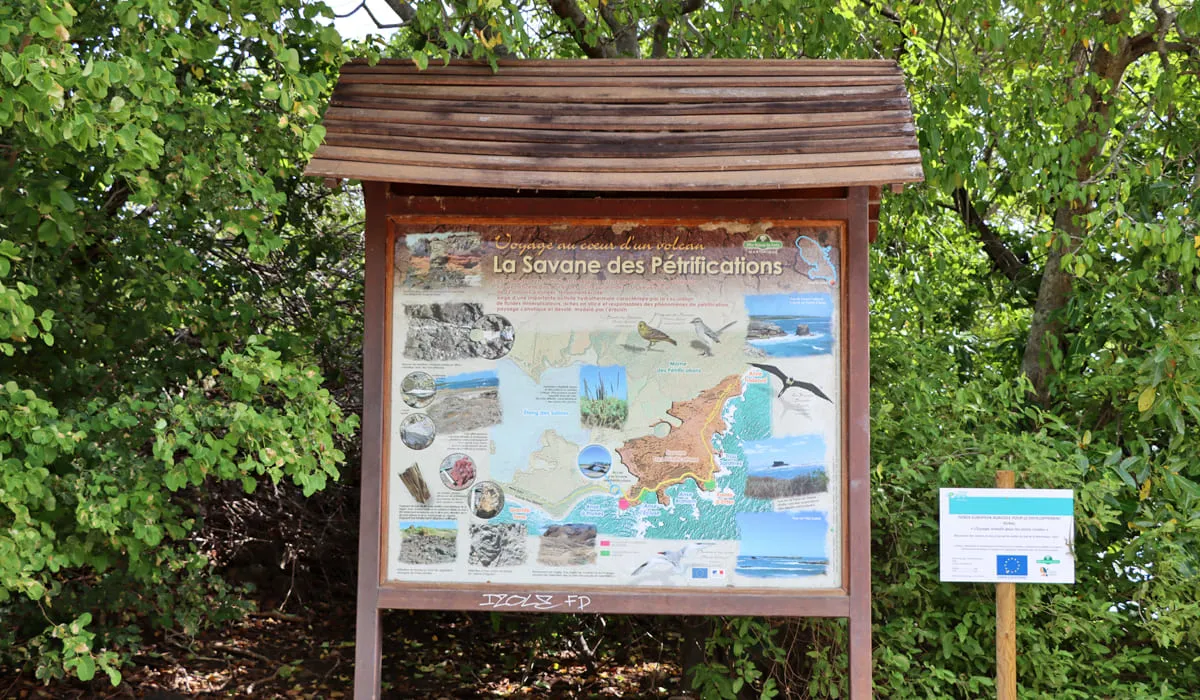
Panneau de la randonnée pour se rendre à la Savane des Pétrifications
Savane des Pétrifications

Îlet Chevalier

Îlet Chevalier is one of the best known in Martinique. It is one of eleven islets of St. Anne, the town that has the most. This is one of the most visited islets in Martinique.

Îlet Chevalier is a former small volcano to the rocky terrain of Strombolian type. It is a natural paradise of some hundreds of meters long as wide. Located on the east coast of the peninsula of Sainte-Anne, facing the Atlantic, it is well protected by a coral reef. It has a rocky relief not very high (24 meters maximum) but steep with a beautiful sandy beach bordered by a dense vegetation and some majestic coconut trees.

Îlet Chevalier has enormous asset to a green and seaside tourism. Indeed, a well-marked footpath allows both to go around the islet that the crossing from side to side, and observe the heterogeneous vegetation and varied wildlife that exists there.

Three white sand coves (from North to Northeast), its water fairly calm and clear, Îlet Chevalier also offers him a pleasant space for relaxation.

Îlet Chevalier remains an area degraded by human activity (overexploitation of the Islet for tourism, human activities on the site, removal of species such as orchids and cacti, mineral fragments or all kinds of little memories natural). All this disturbs and impoverishes the richness of the site.

Moreover, despite the interdiction camping, visitors implant tents in defiance of environmental safeguard rules. Despite the presence of dirt collecting bounds, tourism operators are quick to dump them at sea garbage of all kinds (food, plastics of all kinds), these wastes are then found on the shores of the islet.

You can get there via the Taxi du Cap shuttle to the Cap Chevalier pontoon. The tour price is €4 for adults and €2 for children. Attention after 4pm, it is not possible to visit the islet. At 6pm, all occupants must have left the islet. Navigation is short because only 500 meters apart Cap Chevalier of the islet.

Cascades Didier

Didier's waterfalls are a wonderful tropical paradise that you will find after a hike through the natural environment. Here you will see three different waterfalls where you can enjoy swimming in the cool, clear waters.

While access to the first waterfall is easy, the second and third are more difficult to reach.

The site is accessible 24 hours a day, but given the condition of the trails, which can be slippery in bad weather, it is best to visit during daylight hours and on sunny days. In case of rain, cancel your visit to the site as the consequences can be disastrous. A group of hikers was swept away by the waters, and several deaths were reported.

To get to the Didier waterfalls, head towards Fort-de-France towards Cluny, which is located at the Vietnam Héroïque roundabout. At the roundabout, turn right towards “Didier” and you will be on the road to Didier. Then just continue straight on the D45 for several kilometers. You will then pass through the tunnel.

Continue straight ahead until the end, which is a dead end that serves as a fitness trail where joggers train. At the sewage treatment plant surrounded by barbed wire, park your car to begin the hike, which takes about 20 minutes.

Bring a flashlight, a swimsuit, and athletic shoes.

Saut Babin

Located near the Gorges de la Falaise site, Saut Babin is a true natural paradise. It features a river and pools of exceptionally clear, transparent blue water overlooked by a waterfall.

Very difficult to access, the site has long been closed due to its difficult access, the potential presence of snakes, and pollution from the Capot River. It has been off-limits for years and is not maintained.

Be careful when visiting and wear hiking boots. After walking along a very steep forest trail, you will finally arrive at a hidden gem that is little known locally. Don't forget your camera!

To get there, head towards the town of Morne-Rouge, then follow the N3 road towards Ajoupa-Bouillon. Before entering Ajoupa-Bouillon, turn right towards Grande Savane. You will then arrive at the Vieux Coco neighborhood. You will arrive at the entrance.

Please note that the site is currently closed to the public.

Anse Belleville

Anse Belleville is a Le Prêcheur beach located between downtown and Anse Céron.

Like its sister beaches, its sand is black, due to the eruptions of Montagne Pelée. The beach is frequented mainly by local residents, who come to swim, especially at weekends.

If you'd like to enjoy a dip in the sea on a black sandy beach, you've come to the right place. It is bordered on the west by a huge cliff.

To get there from Fort-de-France, take the N2 to Saint-Pierre, then the D10 towards Le Prêcheur, and continue past downtown towards Anse Céron. A sign announces Anse Belleville.

Photo gallery
Anse Belleville
Anse Belleville
Anse Belleville
Anse Belleville

Dlo Ferré

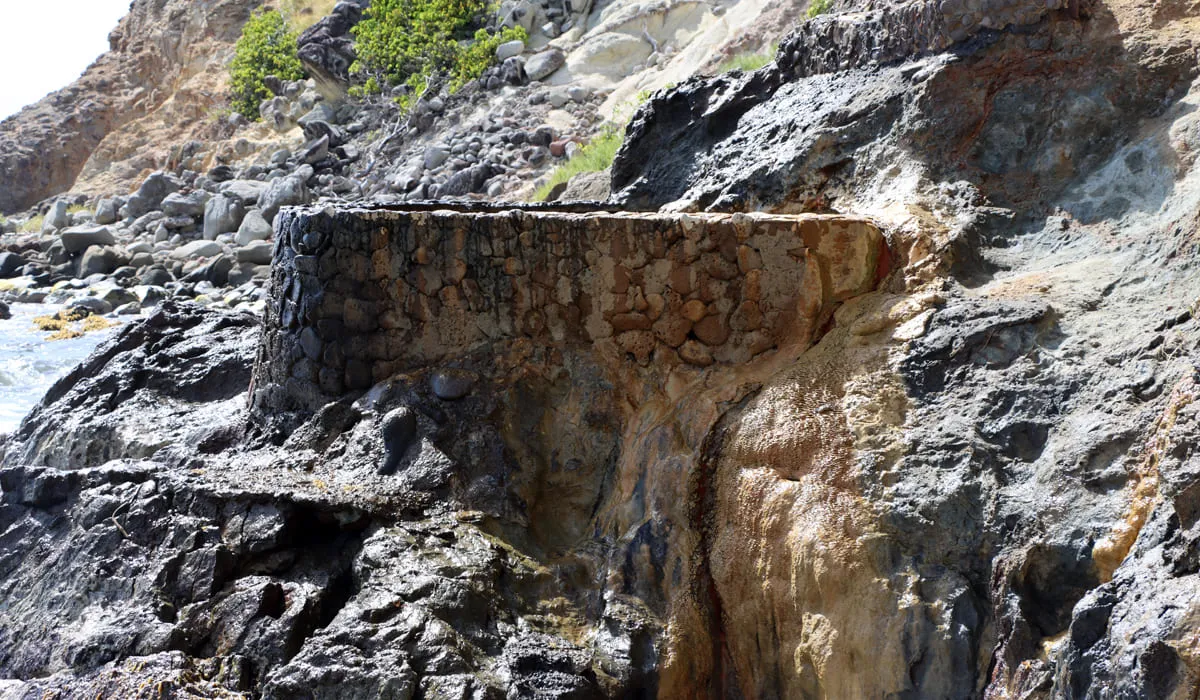
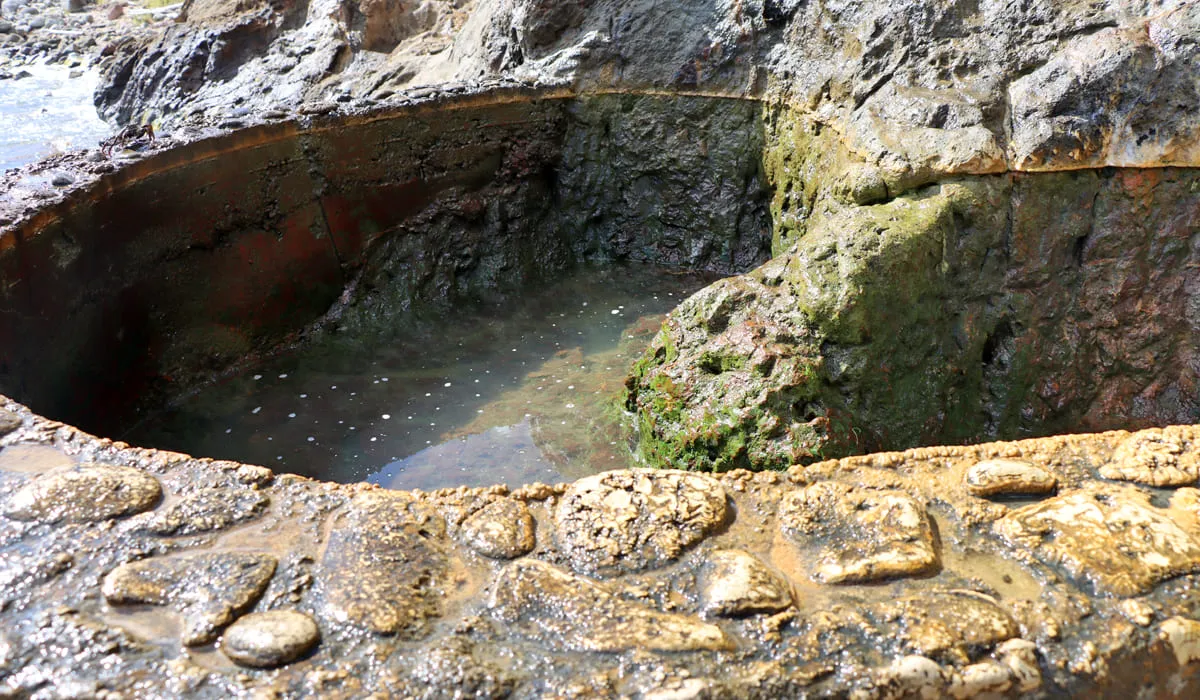
The Dlo Ferré site is a charming little spot that is little known in Martinique but whose main treasure is its hot springs.

Located at the foot of Morne Jacqueline, several small thermal springs emerge on the rocks facing the sea. The largest has recently been developed by the municipality of Anses d'Arlet and the Office Nationale des Forêts.

The hot spring comes from a reservoir at a temperature of around 180°C. The site is listed as a protected heritage site.

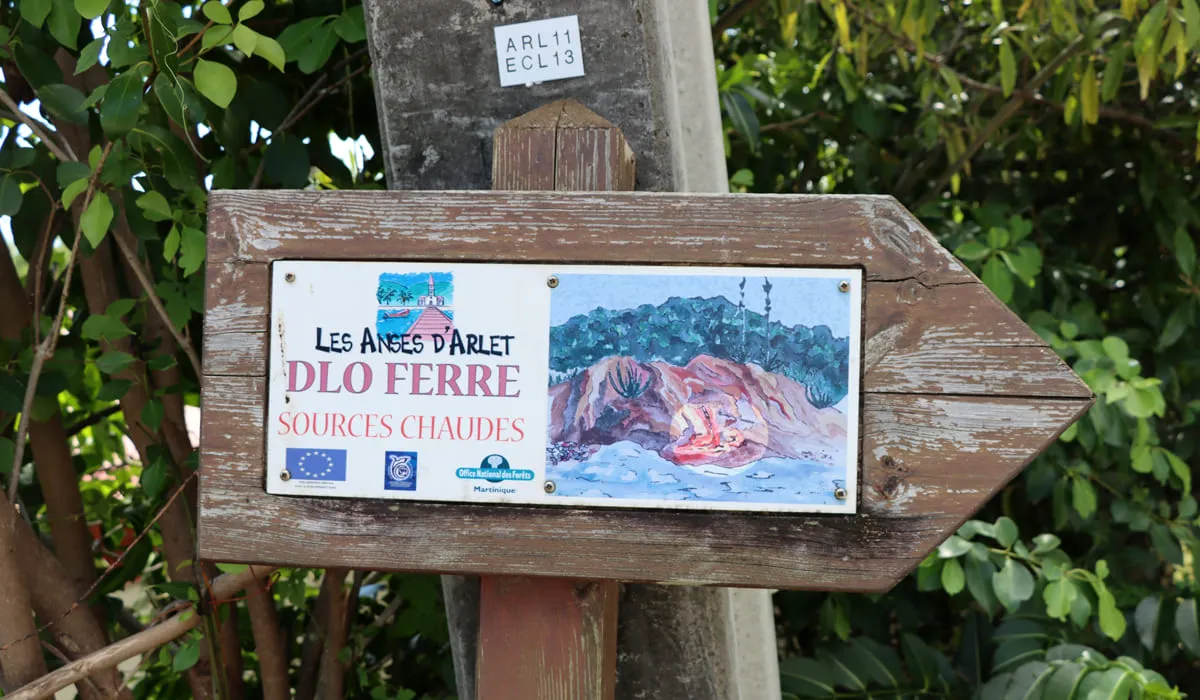
To get there, head for Petite Anse beach in Anses d'Arlet, where you'll need to park your car. Then, either walk along the rocks on the beach on your left or follow the signposted path. Allow an average 15-minute walk to get there.

Bring appropriate footwear if you decide to take the path over the rocks, as they are slippery. Do not take this route with children.

Photo gallery
Dlo Ferré
Dlo Ferré
Panneau d'indication de Dlo Ferré
Plage de Petite Anse et Dlo Ferré
Dlo Ferré
Dlo Ferré
Rochers de Dlo Ferré
Bassin de Dlo Ferré
Bassin de Dlo Ferré

Fishing port of Vauclin

The fishing port of Le Vauclin is Martinique's largest fishing port. In this town, nearly 500 people earn their living from fishing. Around a hundred fishermen land nearly 200 tons of fish and shellfish there every year.

You can sample local species such as carp, coulirou, trevally, sea bream, tuna, and, more occasionally, lobsters, chatrous, and conch.

The fishermen sell their catch to both the island's restaurants and private individuals, many of whom come to buy directly from the port. To buy fresh fish, it is advisable to go to the quays at the end of the morning (between 10 a.m. and 12 p.m.) or at the end of the day, in the early evening (between 5 p.m. and 7 p.m.).

Nearby, there is also a market selling freshly caught fish, shellfish, and a wide selection of local vegetables.

To get there, head towards the village of Le Vauclin, then follow the signs to the port.

Photo gallery
Fishing boats
Fishing boats
Fishing boats
Fishing boats
Fishing port
Fishing port
Fishing boats
Fishing boats
Fishing boats
Fishing boats
Fishing port
Fishing port
Fishing port
Fishing port
Fishing trap
Fishing trap
Woman cleaning fish
Woman cleaning fish
Woman cleaning fish
Woman cleaning fish
Fishermen pulling up their nets

Paul Gauguin Heritage Interpretation Center

Five months! This is the duration of stay of the painter Paul Gauguin (1848-1903) in Martinique, the island he had already visited as a sailor. Indeed, Eugène Henri Paul Gauguin arrived in Martinique in June 1887 and stayed there for five months.

The painter, left with his painter friend Charles Laval work on the construction of the Panama Canal, decided to join Martinique as soon as he would meet the necessary sum.

During these five months, Gauguin moved to the Anse Turin in Le Carbet. He painted twelve paintings and had a natural daughter.

Gauguin lived in precarious conditions, which forced him to return to France in October 1887.

However, his Martinican experience will remain as a turning point in his life as an artist and in his painting.

The Paul Gauguin Heritage Interpretation Center pays tribute to the painter, his work, especially during his stay in Martinique.

Closed for four years for renovations, the museum reopens in April 2014 under the name Centre d'Interprétation du Patrimoine (C.I.P.)  Paul Gauguin (Paul Gauguin Heritage Interpretation Center). In a modernized set, with a fun and interactive media space, the Paul Gauguin Interpretive Center offers the public a dive into all the senses in the world of the painter and his stay in Carbet in 1887.

A new space for temporary exhibitions to promote young artists (including schools) from Martinique and the Caribbean. Numerous exhibitions and projects are planned every year.

Do not hesitate to contact the museum for more information.

Photo gallery
Village in Martinique according to Paul Gauguin
Mango trees according to Paul Gauguin
Swimming pool according to Paul Gauguin